Periodic musings on arts, culture, creative economy and philanthropy issues from the former President and CEO of the Bonfils-Stanton Foundation in Denver, former Chief Cultural Officer for Philadelphia, theatre producer, etc..
Search This Blog
Twelve Years of Transformation - For Bonfils-Stanton Foundation and Me: Reflections on growth, change and impact
This was originally posted to the Bonfils-Stanton Foundation website October 13, 2025, when I announced my plans to step down and make space for new leadership. Now that I have officially ended my tenure at the Foundation I thought it made sense to repost to my personal blog. Excited about what the future holds for me, and also look forward to following the next phase of the foundation as it continues to serve the community. (Apologies for any formatting challenges in transferring this post!)
After more than twelve years leading the Bonfils-Stanton Foundation, I have decided it is time to move on, and it has been announced that a search process is underway to identify my successor. I will stay on through the process to ensure a smooth transition. I am excited about what the future holds for the Foundation and the opportunity for new leadership.
I am extremely proud of what we have accomplished at the Foundation since I arrived in 2013. This has been made possible by an extraordinary team of colleagues and a supportive group of current and past Board members – not to mention by an inspiring community of artists, arts organizations and philanthropic leaders. Foundations have at their disposal financial capital that they can use to make a difference, as well voice and influence. I believe that through our work–in grantmaking, impact investing, and being an advocate, ally and partner–we have made a difference these past 12 years.
It has been a pleasure to work with four different chairs in my tenure, starting with the late, great Lanny Martin, to whom I owe deep gratitude for bringing me to Denver and for his kindness and wisdom.
Some of the the Foundation’s accomplishments over these years include:
Board evolution: Introducing term limits and expanding membership to bring in more diverse community perspectives and representation.
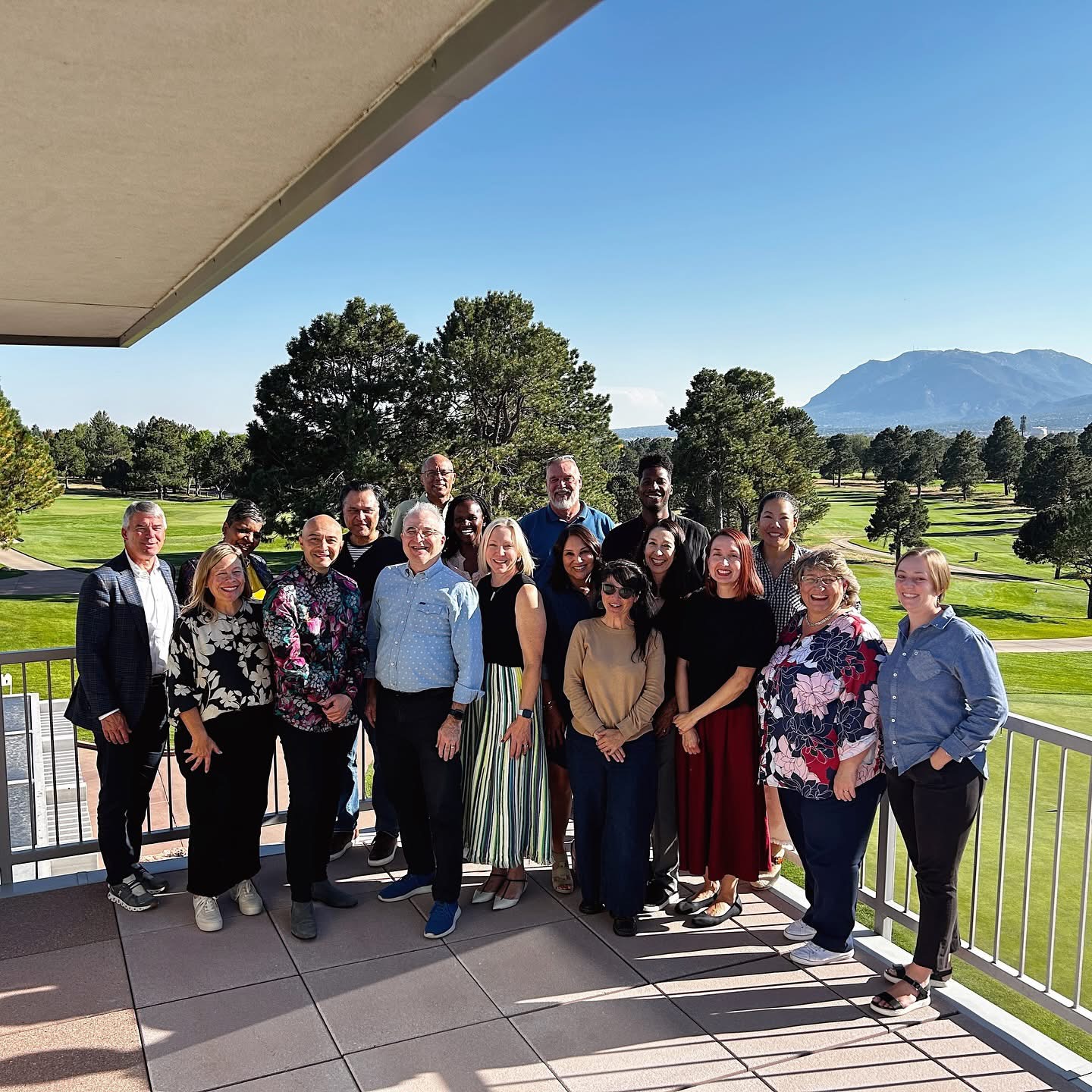
BSF Staff & Board at a Board Retreat in 2024
Strategic direction: Overseeing two major planning processes, including a significant pivot towards prioritizing equity in our work, which involved deep self-reflection and transformation of our systems and language, staff and board training, and using our voice and resources in new ways. This work, of course, is never done and never perfect.
Grantmaking impact: Increasing the share of grants to BIPOC, LGBTQ+ and Disability groups from 2% in 2012 to about 40% today. We also introduced multi-year general operating support, technical assistance grants, and smaller, nimble staff-level grants to respond swiftly to community projects where timely modest funding can make a huge difference.
Inclusive Communities grant program: Created to reach smaller groups serving historically marginalized communities, this program continues to grow and evolve, welcoming dozens of new groups into our community of grant partners–for many receiving their first foundation support.
Collaborative initiatives: Launching programs like Arts in Society and Equity in Arts Learning for Colorado Youth, with Redline and Think360 Arts for Learning as partners, respectively, distributing millions to impactful projects throughout the state while also bringing in many other funding partners.
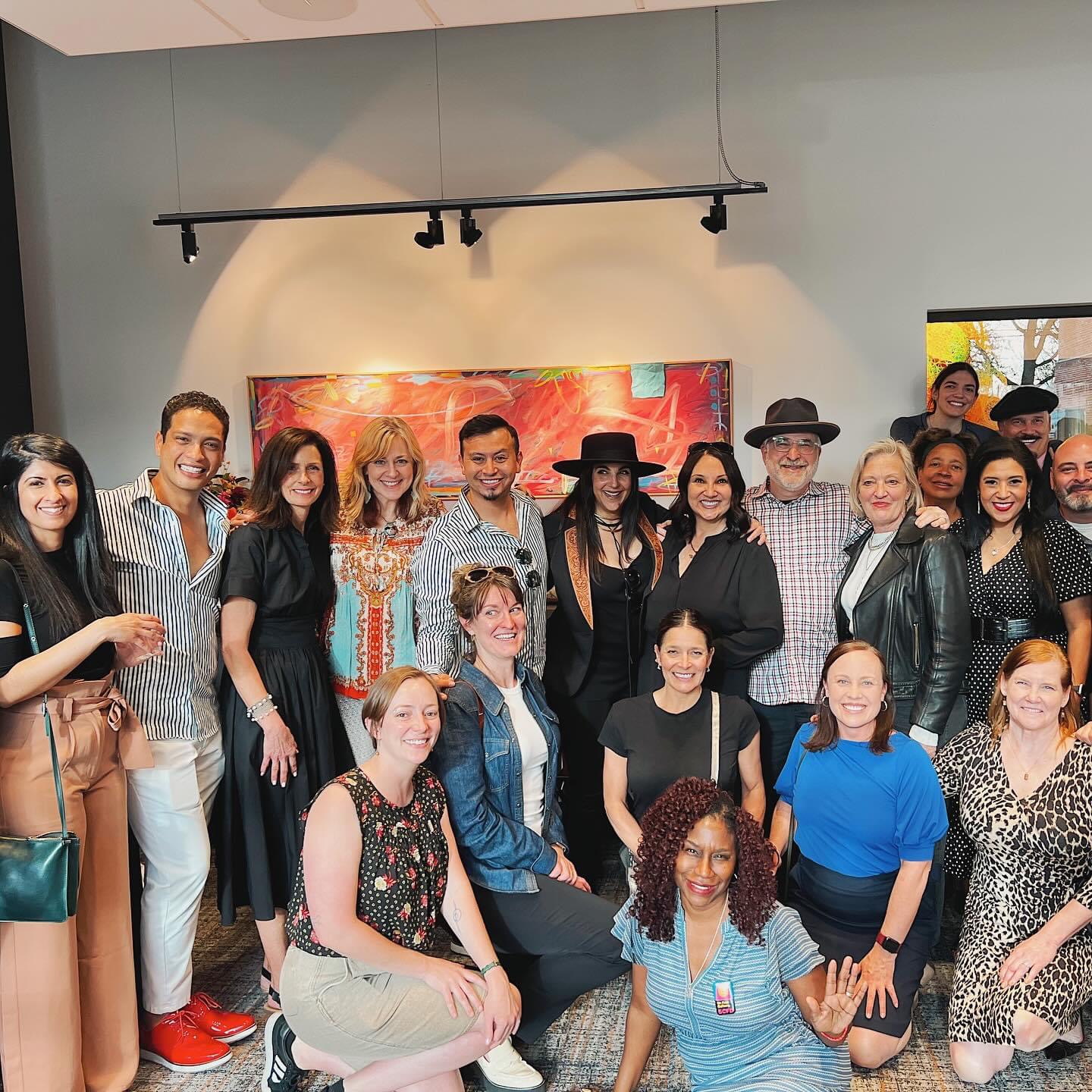
Community partners of all kinds at a celebration in the BSF offices.
COVID response: Swiftly providing every grant partner 10% of their most recent grant award–no application and no process–followed by a $1 million commitment towards emergency relief for arts groups. The total more than doubled by other funders through a partnership with The Denver Foundation, distributing well over $2 million.
Legacy gift transformation: Partnering with DU’s Korbel School to repurpose a legacy gift from May Bonfils Stanton into a new endowed cultural diplomacy program at the school.
Leadership investments: Our commitment to leadership has also evolved in profound and impactful ways. Evolving the Livingston Fellowship program to better meet the needs of today’s leaders-especially BIPOC leaders, who have comprised a growing share of the Fellows from 20% prior to 2012 to 93% in recent years, recognizing that these leaders have much more limited access to other leadership investments. The program's commitment to meet leaders where they are, recognizing that their needs can be very different, has been a constant. To support the next generation of leaders, we created the Equity-Focused Leadership Grants program to support some of the many existing programs in the community that are nurturing diverse leaders.
Impact investing: We shifted our approach in how we invest our assets–aligning roughly 70% of our corpus with our mission and values, incorporating impact investing principles, and using Program Related Investments to provide low interest loans for mission-aligned projects.
Community space and real estate: We have responded to the critical real estate needs in the cultural community by supporting major capital projects at organizations like the Denver Art Museum, Denver Botanic Gardens, Cleo Parker Robinson Dance, Su Teatro, Latino Cultural Arts Center, Lighthouse Writers Workshop, ArtistiCO and Access Gallery, just to name a few. This also involved supporting the creation of Community Arts Stabilization Trust Colorado to address affordable real estate throughout Denver and Colorado.
New Home: Creating a welcoming new headquarters in the Santa Fe Arts District, incorporating work by local artists and making the space available for community use.
Emergency response fund: Launching a fund earlier this year to support arts groups struggling with lost NEA funding and other federal impacts, quickly distributing $400,000 in relief.
Elevating storytelling and advocacy: We have made a significant commitment over the past few years to better communicate the value of a diverse equitable cultural sector and tell the stories of our artists and arts organizations. We have also elevated our commitment to policy and advocacy as a vehicle for effecting positive change for the arts in the public sector and with other funders.
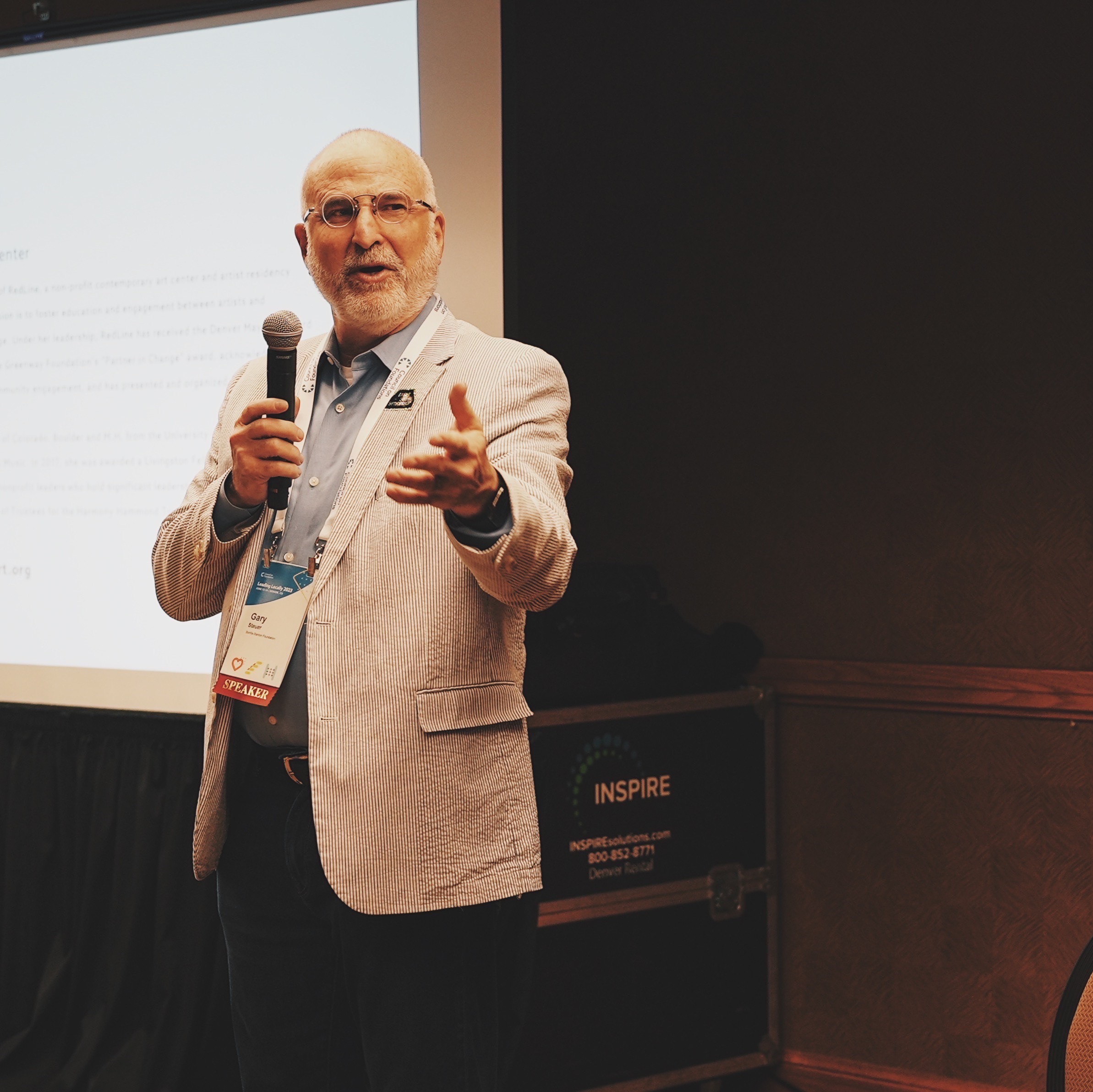
Gary Steuer speaking at a conference
It has indeed been a very busy and fruitful 12 years–this is just a sample of the work that has taken place. I know Bonfils-Stanton Foundation will continue to thrive, evolve and respond to community needs, as it has throughout its long history. It remains in great hands-with a strong, committed board and an extremely talented and dedicated staff team. For me the work at the Foundation has been a continuation of the work throughout my career to advance arts and culture in our society, in local communities like Denver, and at the national level. This work has NEVER been more important than it is now.
I have also come to love this community of extraordinary creators, cultural organizations, philanthropic and community leaders. Despite what may seem like dark times, I believe the future is bright for the Foundation, and for this community.
I look forward to continuing to make a difference–staying true to my values–in whatever the future holds.
With all the financial challenges arts workers are facing these days - struggling to balance the budgets of their organizations, or dealing with salary and benefit cuts on compensation that was modest to begin with - it is easy to view the sacrifices people make to work in this field as being entirely financial. Not to minimize the financial sacrifices - they ARE significant - but I would argue they are probably no more significant than a wide array of professions where people choose to devote themselves to the pursuit of "making the world a better place". This includes early childhood workers, teachers, social workers, the whole world of NGOs working in challenged communities, both domestically and abroad. And the sacrifices all these workers make are also not just financial. We all work long hours, and often under trying and unglamorous circumstances (though to outsiders arts work can seem glamorous). No, I think the more significant - and unique - sacrifice arts worke...
Dancer Jin Young Woon of Cedar Lake Contemporary Ballet source: Cedar Lake Facebook page, photographer not credited The recent case of Cedar Lake Contemporary Ballet in New York City shuttering as a result of the withdrawal of support from their major benefactor, Nancy Laurie, an heiress to the Wal-Mart fortune, has sparked a dialogue around the pitfalls of over-reliance on a single donor. The New York Times wrote about the dance company's closure here , and Michael Kaiser addressed the larger issue in a blog post here . Clearly, significant dependence on a single donor by an arts group poses serious challenges, and adds to institutional risk. On the other hand there has been a significant growth of arts institutions, largely in the visual arts, that are the creation of single donors/collectors. Would the excellent Neue Galerie in New York be able to survive without the support of Ronald Lauder and his family wealth? Unlikely. And many of our now-great institutions with d...
Leon Jesse James, "Space Modulator", acrylic on board. SCI Graterford The Art in City Hall program of the City of Philadelphia has just opened a new exhibition, INSIDE/OUTSIDE - Art by Prison Inmates and Ex-Offenders . This is a wonderful, powerful, and thought-provoking new show and I encourage everyone to see it. It is open until October 29th, on the secod and fourth floors of City Hall. More information is available here . The show involves participating artists from SCI Graterford, The Philadelphia Prison System, Art for Justice , Snyderman-Works Galleries , Connection Training Services , and the Mural Arts Program 's Youth Violence Reduction Partnership Guild Program, as well as local ex-offenders. Thomas Schilk, "Beetle", melted plastic spoons, paint. When I came to my position in 2008 as Chief Cultural Officer, one of the appeals of the position was the fact that the administration of Mayor Michael Nutter viewed the arts as being integral to virt...
.jpg)
Comments
Post a Comment